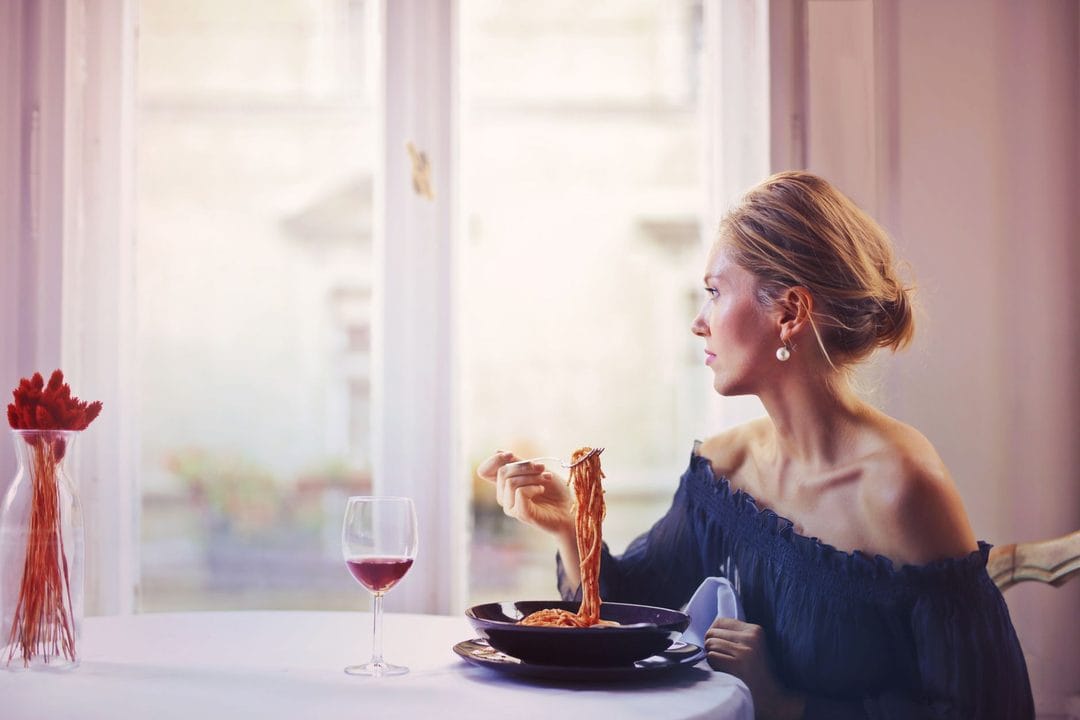
The first time I asked for a table for one in Lisbon, the host paused just half a second too long before reaching for a menu — and I spent the next twenty minutes convinced everyone in the restaurant had clocked me as the woman who got stood up. Nobody had. The waiter brought bread, refilled my water without being asked twice, and by the time the bacalhau arrived I'd forgotten anyone else was in the room. That half-second pause turns out to be the whole story of solo dining abroad: it feels enormous in the moment and means almost nothing to anyone but you.
The Half-Second Pause, and Why It Isn't About You
Hosts hesitate before seating a solo diner for one reason, and it has nothing to do with pity — it's table math. A four-top seats four people at full margin; a solo diner at that same table is, from a purely commercial standpoint, a loss the restaurant absorbs for an hour or two. Busy restaurants in cities like Barcelona or Rome will sometimes route you toward the bar or a small two-top near the door precisely because they're trying to keep the big tables free for groups, not because they're steering you away from anything. Once you know that, the pause stops reading as judgment and starts reading as logistics, which is a much easier thing to sit with over a glass of Albariño.
Where this gets genuinely uncomfortable is in restaurants built around shared plates and family-style service — the kind common across much of Southern Italy and rural France, where a meal is assumed to be a communal event and the menu itself is priced and portioned that way. A solo diner in a Neapolitan trattoria that only does antipasti platters for two isn't being difficult by asking for a smaller version; she's bumping against a kitchen that genuinely wasn't built for her table size. The fix isn't to feel bad about it — it's to ask directly whether a half-portion or a primo-only order is possible, which most kitchens will do without blinking once you ask instead of apologizing your way around it.
Where You Sit Changes the Whole Meal
Counter seating is the single best invention for solo travelers, and it isn't close. In Tokyo and Osaka, eating at the counter isn't a consolation prize for people dining alone — it's the preferred seat, the one regulars fight for, because you watch the chef work and the conversation, if there is any, happens naturally with the person cooking your food rather than being forced with a stranger at the next table. Ramen counters, sushi counters, standing izakaya bars: all of them are designed around single diners as the default customer, not the exception.
Ask for the bar or the counter before you ask for a table, even in cities where it isn't the local default. A seat at the bar in a Parisian bistro puts you close enough to the staff that service tends to get warmer and faster, and it removes the visual of an empty chair across from you, which is honestly the part that bothers most people more than the eating alone itself. Window tables sound romantic in theory but often leave you facing the street with your back to the room, which can feel more exposed than a spot at the counter with your back to a wall and a clear view of everything happening around you.
The Phone Question Everyone Gets Wrong
Put it away for at least the first course.
This is the one piece of advice that gets argued about the most, and I'll say it plainly: scrolling through your phone the entire meal reads as anxious, not relaxed, and it also means you miss the parts of solo dining that actually make it worthwhile — noticing the couple arguing quietly two tables over, catching the specials the waiter recites but doesn't write down, tasting your food instead of half-tasting it while thumbing through messages. A book works better than a phone for exactly this reason: it signals you're enjoying this on purpose rather than filling dead time, and it gives your hands something to do between courses without pulling your attention out of the room entirely.
Book Ahead, Even When You Don't Need To
Calling or emailing ahead for a table for one changes how you're treated on arrival more than almost anything else on this list. A reservation under your own name means the host is expecting you specifically, which removes the walk-in awkwardness entirely and, in my experience, gets you a noticeably better table than showing up unannounced at a busy restaurant during peak service. This matters most in cities where reservations are the norm rather than the exception — Copenhagen, Vienna, most of Japan — and matters far less in places built around walk-in culture, like most of Spain, where showing up and asking is completely standard for everyone regardless of party size.
Order Like the Regular You're Not
Skip the instinct to order just a salad because it feels like the safe, low-commitment choice for a table of one. Order the pasta course and the wine pairing. Order the tasting menu if the restaurant offers one — most kitchens will happily run a smaller counter version for a single diner, and it's often the best value on the menu because you're getting the chef's actual range rather than one dish you picked somewhat at random. A glass of wine with dinner is not an event that requires company to justify; it's dinner.
The exception worth naming honestly: corkage and bottle minimums at some higher-end restaurants genuinely do work against solo diners, and there's no polished way around a wine list where the cheapest bottle runs €45 and glasses aren't offered. In that specific situation, asking the sommelier directly for a by-the-glass recommendation off-menu usually gets you further than trying to justify a full bottle for one — most will quietly pour you something interesting rather than lose the sale entirely.
The Bill Works Differently Than You Think
Tipping culture trips up solo diners more than almost anything else, mostly because there's no one across the table to split the mental math with. In the United States, 18 to 20 percent is the expected floor at a sit-down restaurant regardless of party size — a solo diner tipping 10 percent because the bill "feels small" will get noticed by staff, and not in a good way. In Japan, the opposite rule applies completely: tipping is not just unnecessary but can come across as confusing or even mildly insulting, since exceptional service is simply the baseline, not something purchased separately. France and much of Western Europe build service into the price as service compris, so a euro or two rounded up is a genuine thank-you rather than an obligation, and nobody at the table — or lack of one — is doing percentage math in their head.
Ask for the bill the moment you're ready rather than waiting to be offered it, especially in countries where servers consider it rude to rush a table. In Spain and much of Southern Europe, a bill won't appear until you request it — "la cuenta, por favor" — because presenting it earlier would signal the restaurant wants you gone, and that courtesy applies exactly the same to a table of one as it does to a table of six. Card machines get brought to the table in most of Europe rather than your card disappearing to a back register, which, as a solo traveler carrying your only form of payment, is one small logistical relief you'll come to appreciate more than you expected.
When a Stranger Starts Talking to You
It happens more at the counter than at a table, and more in wine bars than in formal restaurants. Someone leans over, asks what you're having, and now you're deciding in real time whether you want company or whether you sat down specifically to not have any. Both answers are fine, and the trick is not overthinking the exit: saying you're enjoying some quiet time tonight closes the conversation politely without inventing an excuse, while asking what they're drinking opens it if that's genuinely what you want. Neither answer requires justification to anyone, including yourself.
Some Cities Make This Easy. Others Don't.
Tokyo, Copenhagen, and most of the UK treat solo dining as unremarkable — you'll see locals doing it constantly, at every price point, with zero acknowledgment from staff that anything is unusual. Paris sits somewhere in the middle: cafés and bistros handle it effortlessly, but the more formal, tasting-menu end of the city still assumes pairs, and a €200 tasting menu built for two feels like a harder sell to book solo than a €35 neighborhood bistro dinner. Naples, rural Andalusia, and much of small-town Greece are the places where you'll feel it most — not because anyone is unwelcoming, but because the restaurant culture itself is built around big, loud, shared tables, and a party of one is genuinely rarer there than in the cities built around fast individual meals.
None of that means skip those places. It means adjust the plan — eat your one big communal meal there with a tour group, a cooking class, or people from your accommodation, and save the solo dinners for the cities where the culture already expects them. That's not a compromise; it's just reading the room correctly, which is most of what solo dining abroad actually comes down to once the nerves wear off.